Company
Subfrost Interactive
Role
UX Designer
Timeline
Sep. 2021 - Jan. 2022
Game Engine
Unity Engine
Tools
Google Workspace (Forms, Docs, Sheets, Slides)
Responsibilities
Competitive Analysis
Playtesting
Platforms
A few months after Cobots’ release on Steam, the developers at Subfrost Interactive had plans to port the game to another gaming platform. Although they were unsure if the game would fit and do well there.
I was able to work alongside my teammates to help out the developers with their decision making by conducting playtests, and doing competitive analysis.
Highlights
Presenting solid research findings to the developers to help them out for a potential port to a popular gaming platform.
Playtests with a focus on simulating the target platform’s experience
Collecting feedback on how well the game experience can be if it was played on the targeted platform for a release.
New findings
Discovered both opportunities and issues during the playtests, and made sure to come up with potential solutions that can help the developers.
Analyzing the market
Neat documentation of the market research; upcoming releases, price-points of games within the similar genres, events suitable for announcement.
Leading the communication
Led the responsibility of setting up appropriate communication channels to keep the development team updated on our work, and set up meetings to present our findings.
Starting Somewhere
Teaming up!
Since this project was a collaborative work between University of Skövde and Subfrost Interactive, before contacting the dev-team, I was assigned to form a group with two of my classmates.
We made sure to write-up a contract to establish some ground rules about our availability, and how the project would go on for the upcoming weeks.
Problem Space
An opportunity to reach more players
During our first meeting with the developers, we clarified and wrote down the goals for the collaboration period. The developers main goal was reaching to more of their target audience through another gaming platform, while keeping an eye on the potential competitors.
Even though they were working on their next game at the time, they were open to the idea of improving Cobots’ experience if it would beneficial from releasing it on the new platform.
Noting down the constraints
There were limitations that we had to consider before starting with any of our work.
A few hours each week
Since the project was a collaboration between the university and the studio, we were allowed to dedicate a few hours throughout the week.
No ideal playtests
We had to consider that there wasn’t a build of Cobots that can run on the desired platform, so for playtesting, an environment that could depict the platform as close as possible had to be set up.
The market continues to shift
Even though our research results should give strong estimates of whether the genre can do well on the targeted platform, trends and unannounced games can shift the market fast.
Splitting up the work
After our discussions with the developers, as a team, we split up our workflow so every member had a clear focus point. For the market research we decided to each take certain regions to focus on, and for the on-site playtests we made sure to always be present as a group.
I primarily focused on analyzing the European region market for the target platform, and conducting both observational and remote playtest sessions to pin-point any issues that might arise with the port of the game, all while leading the communication channels with the developers to book in meetings and have discussions about our progress.
Playtests
Playtest Sessions
Throughout the whole collaboration, we were able to conduct two types of playtest sessions; observational and remote playtests.
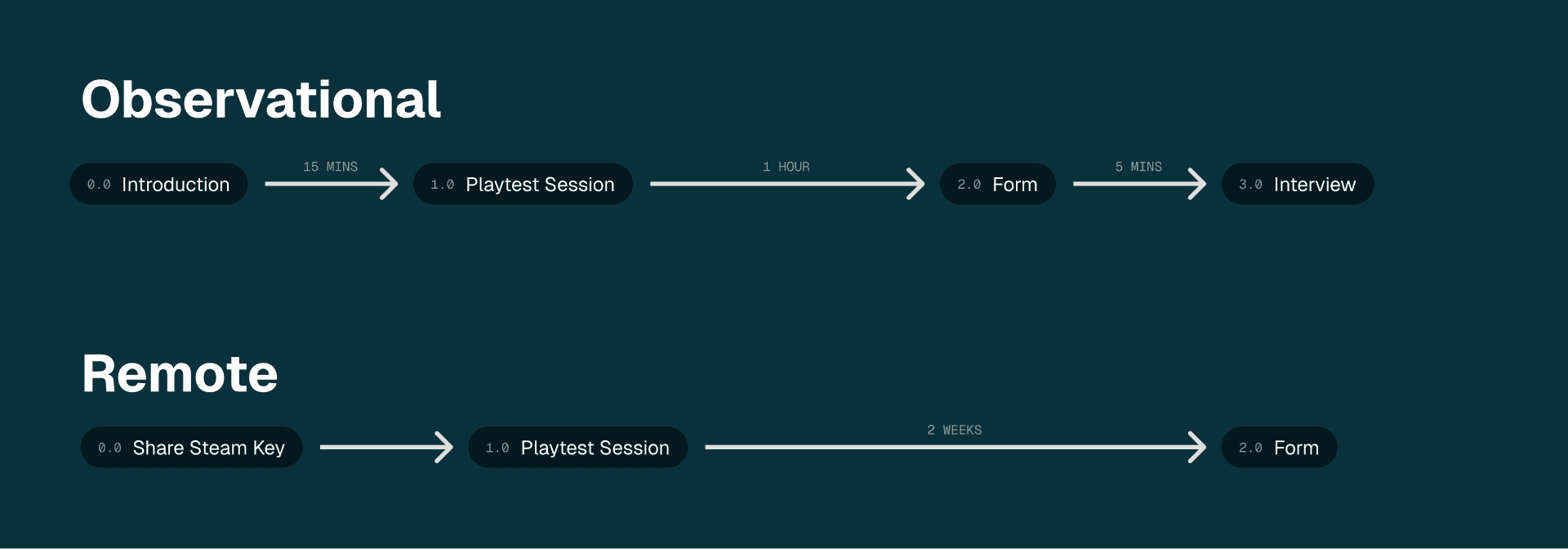
Two different structures of the playtests.
Noticable hiccups
Throughout the playtest sessions, it was clear that the participants were having a hard time noticing the timer, the robot count, and the ability to change the camera angle to clear the level. A lot of testers were running out of time, or got confused when they ran out of robots to play as before they got to complete the level.
How do they think?
Having the interviews right after conducting the playtests helped players to give better feedback about their experience. The questions were focused on when and why they stopped playing, the overall difficulty curve, how much they would be willing to pay for the game, and how much have they felt like a completionist when playing the game.
Once the interview was over, I asked the participants to re-arrange elements on the HUD, and see how they would place the UIs throughout the screen.
Almost all the participants agreed on placing the timer at the top middle of the screen, and they grouped the active robot and chip indicators together. The placement for controls reference was the only element where the participants' answers did not match.
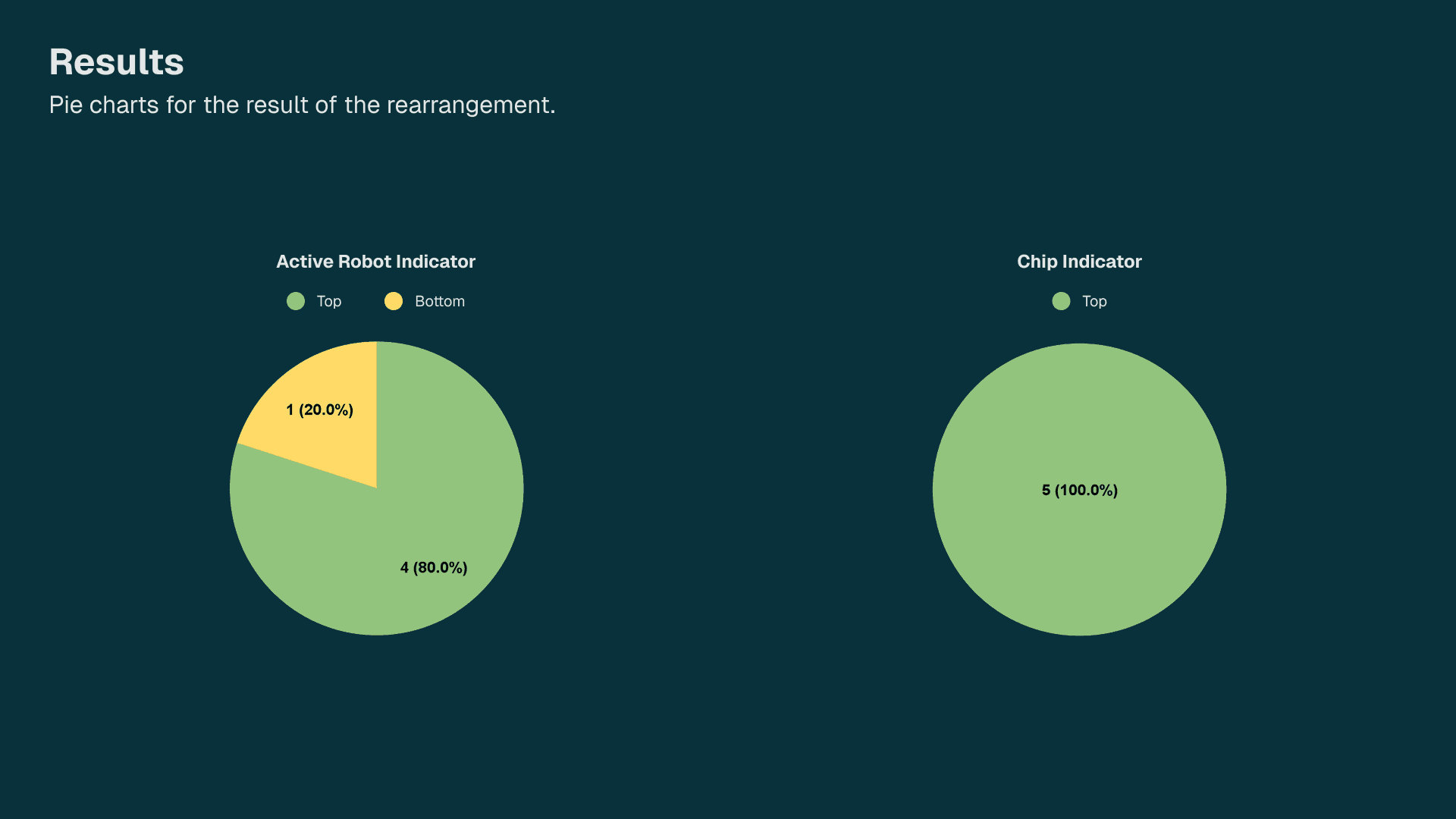
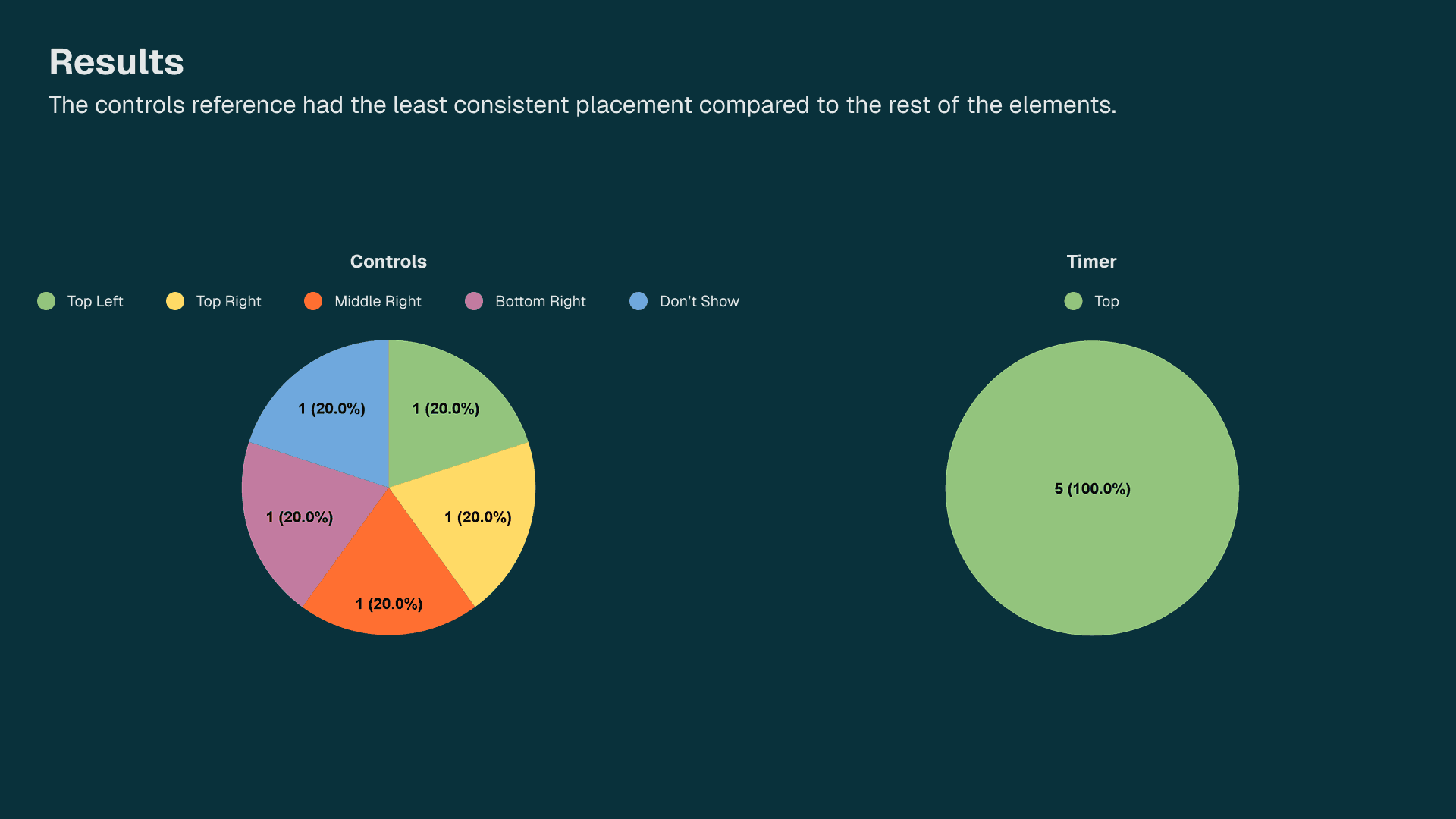
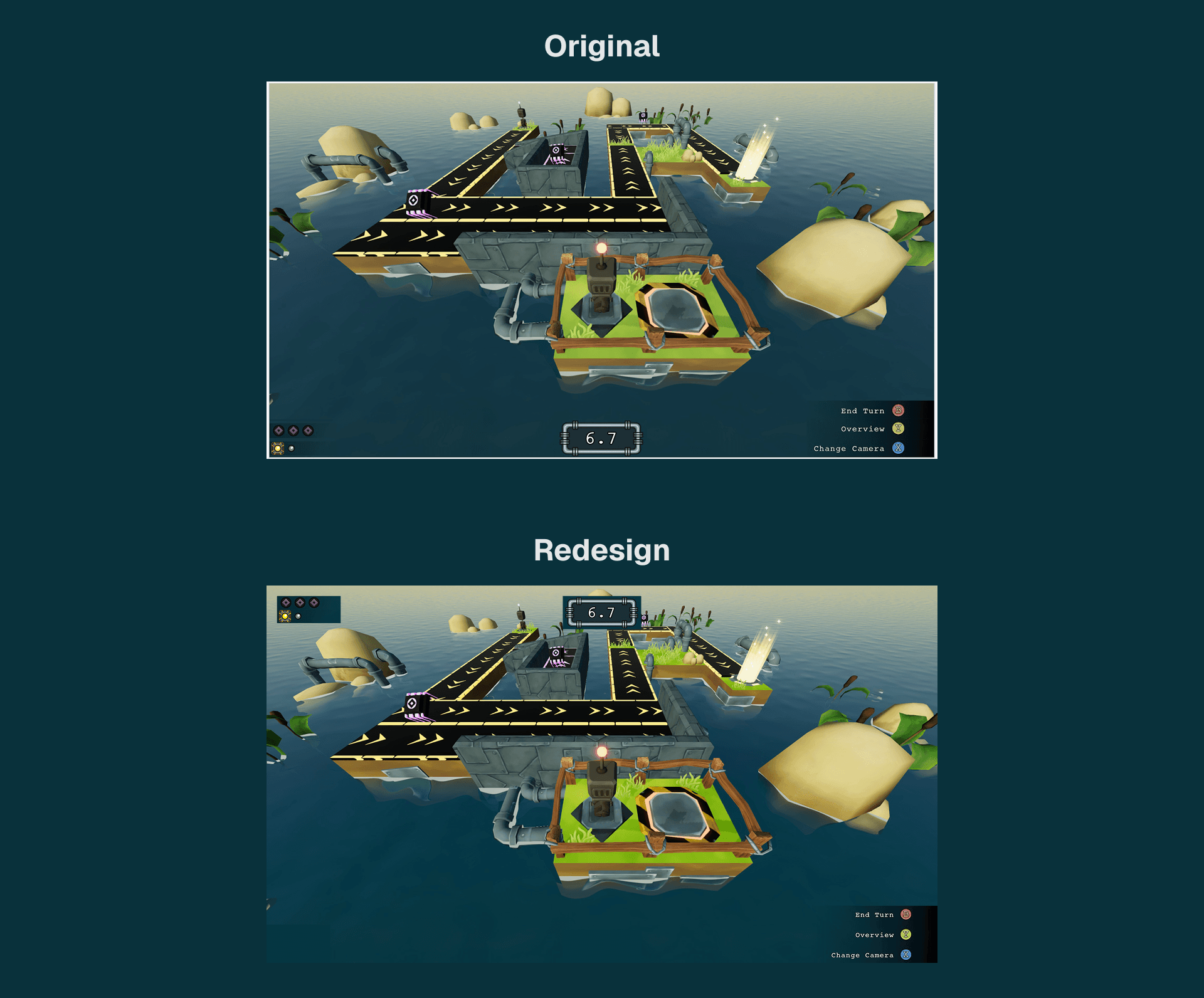
Redesign results.
Solution Space
Switching out some levels
Even though playtesters were able to tell us some details about the how the levels went, we wanted to formulate it in a way to make an overall analysis.
To be able to measure the difficulty, we came up with a formula for difficulty, by basing the difficulty level (D) of the first level as 1.
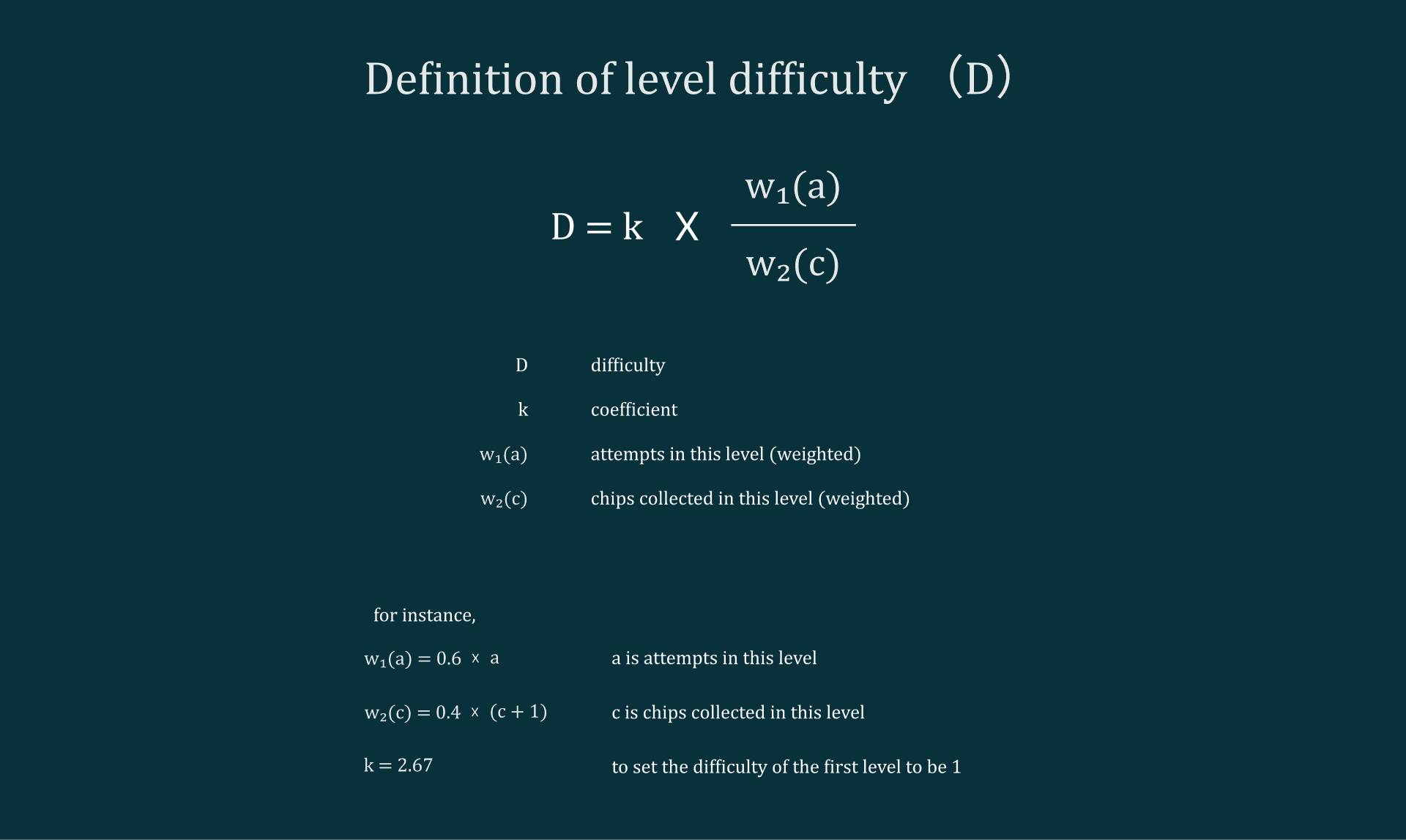
Formula for measuring the level difficulty.
Using this formula we were able to quantify the difficulty of the levels throughout the sessions and were able to showcase an average difficulty graph of the game.
As a result, we were able to mention to the developers to balance out the levels by switching progression order.
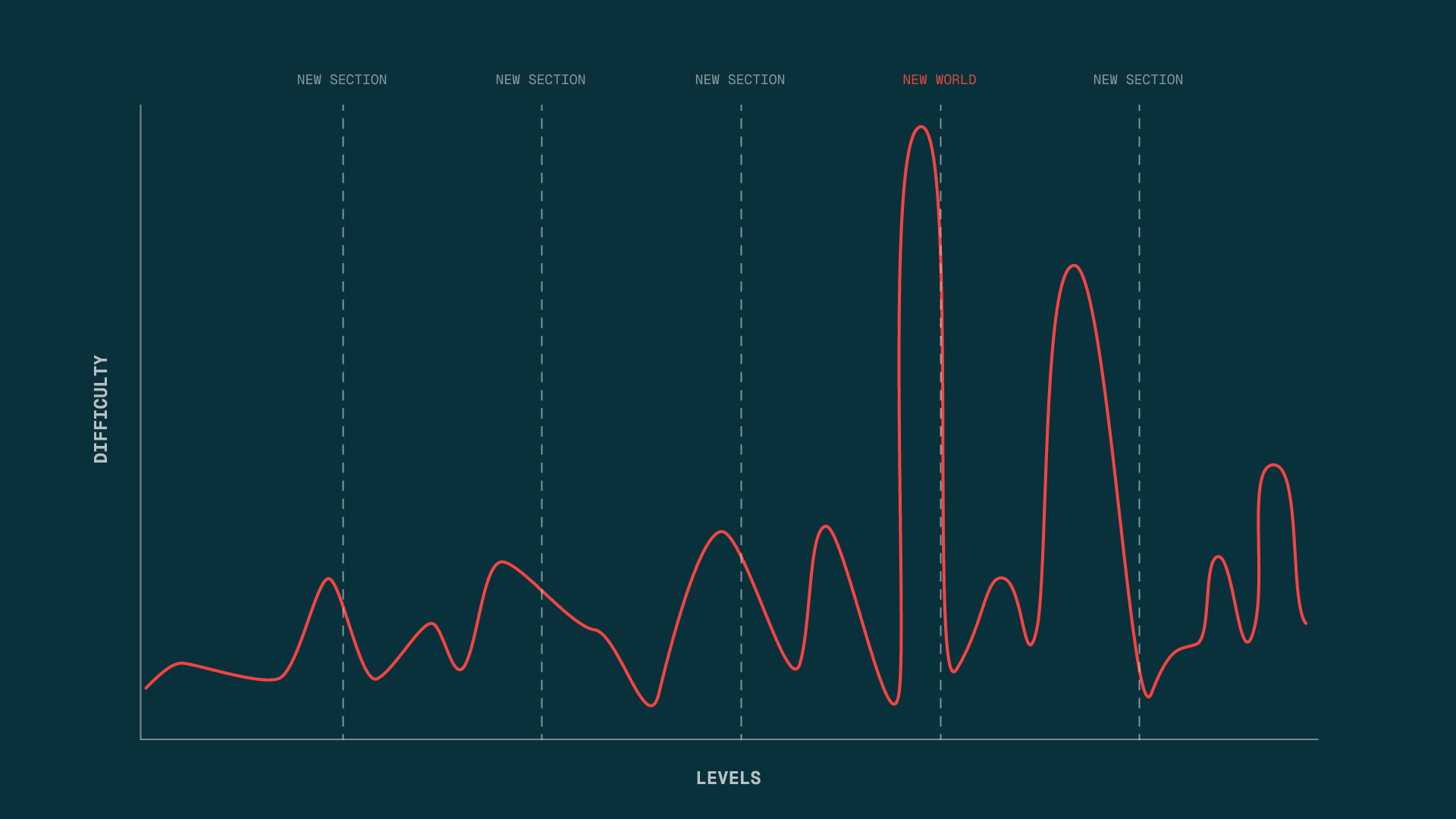
Graph showcasing the difficulty spikes throughout the game's levels.
9-Slicing HUD
As a solution for the playtesters missing out on the controls, similar to 9-slicing sprites, splitting the HUD into 8 zones (ignoring middle-center) for UI elements to be placed can help the players customize their HUD with the way that they would prefer.
A setting would pop-up a screen similar to the mockup shown below, and the players would have the ability to drag and drop the UI elements to the places that are available.
Additionally, adding an option to show or hide some elements could be a nice to have, especially if players have played the game for some time, the controls reference may be less important to always have on the screen.
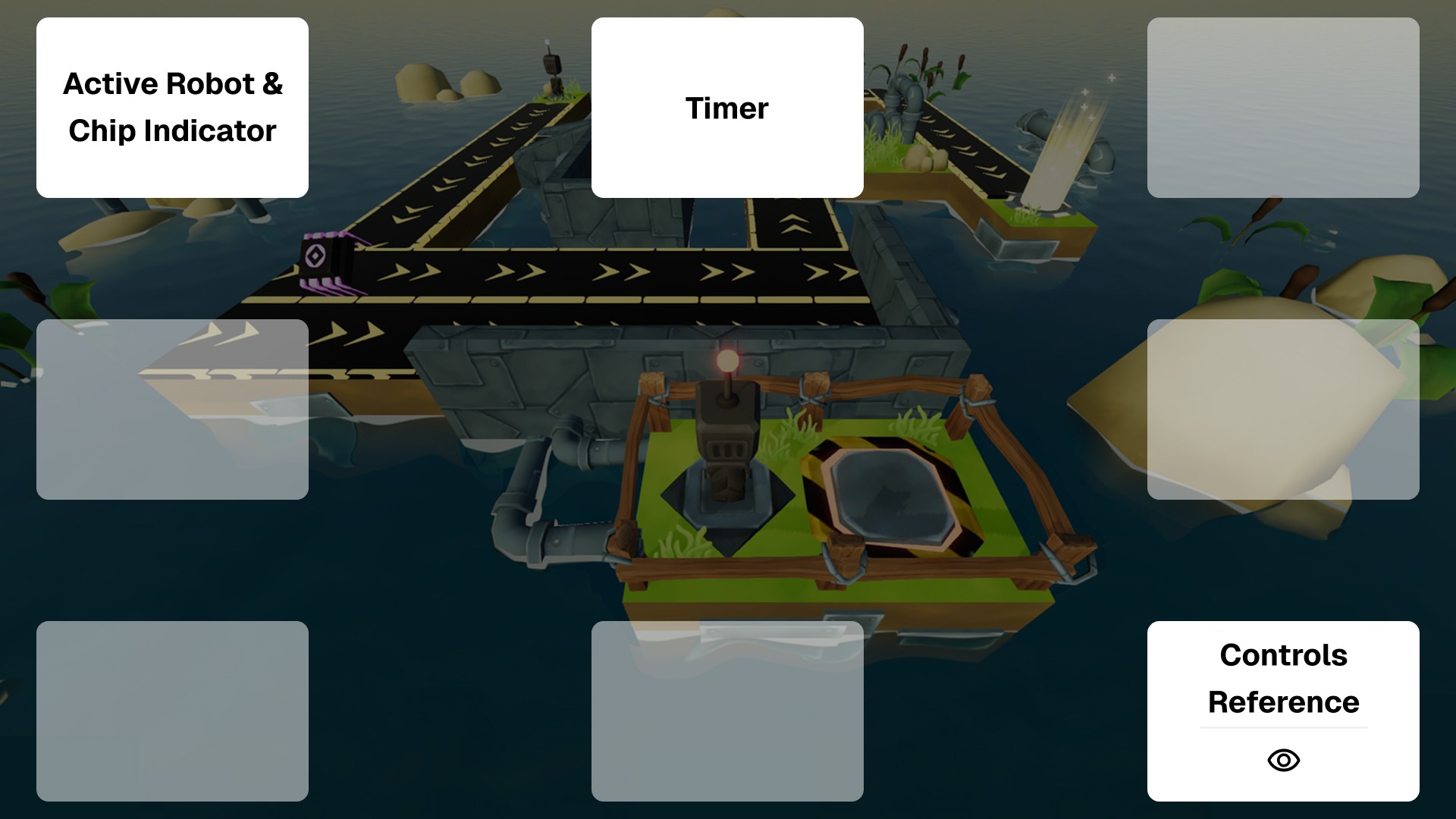
9-Slicing solution for the HUD.
Market Research
Keeping track of the market
For the market research, I was in charge of keeping track of the puzzle games released in the European region on the platform’s e-store. Several categories were noted down and grouped for every two weeks, to base the estimations.
All the data collected were recorded neatly to provide methods for successful marketing and announcing the game on the new platform.
Retrospective
Bittersweet ending
In January 2022, when our course was reaching its end, we compiled all our findings and handed them off to the developers if they continue on with the port of Cobots.
Findings
One thing can lead to another
Even though our playtests were focused on figuring out the difficulty curve, we were able to gather more info on certain things being missed out on.
Detailed documentation to smooth out the decision
Delivering a summary report of all the findings compiled for the developers to make the decision of porting smoother.
Being open about the process
Meeting up with the developers almost weekly to share the findings allowed us to make changes to our workflow easily if needed.
2025 • Made with passion and a lot of coffee