
E-Commerce Experience
Company
Garanti BBVA Technology
Role
UI/UX Intern
Timeline
Aug. 2020 - Sep. 2020
Responsibilities
Design Thinking
Interaction Design
UI Design
UX Design
Tech
Sketch, InVision, Photoshop
I was an intern at the UI/UX team of Garanti BBVA Technology. First week of the internship was focused on learning how the design thinking phases are applied within the the bank, and later on I was assigned with a task to present a concept that can be used within a leading online clothing shopping website.
E-Commerce Experience
Company
Garanti BBVA Technology
Role
UI/UX Intern
Timeline
Aug. 2020 - Sep. 2020
Responsibilities
Design Thinking
Interaction Design
UI Design
UX Design
Tech
Sketch, InVision, Photoshop
I was an intern at the UI/UX team of Garanti BBVA Technology. First week of the internship was focused on learning how the design thinking phases are applied within the the bank, and later on I was assigned with a task to present a concept that can be used within a leading online clothing shopping website.
E-Commerce Experience
Company
Garanti BBVA Technology
Role
UI/UX Intern
Timeline
Aug. 2020 - Sep. 2020
Responsibilities
Design Thinking
Interaction Design
UI Design
UX Design
Tech
Sketch, InVision, Photoshop
I was an intern at the UI/UX team of Garanti BBVA Technology. First week of the internship was focused on learning how the design thinking phases are applied within the the bank, and later on I was assigned with a task to present a concept that can be used within a leading online clothing shopping website.
Highlights
Highlights
Highlights
Application of Design Thinking Principles
As my first task, I had the chance to learn about the different design thinking phases that was used throughout the bank. These phases could be broadly explained in these steps:
Researching the user, and stating their needs
Brainstorming ideas to find solutions to the stated problem
Prototyping the idea and testing it as a team
Conducting user tests to get feedback on the prototypes
Once these steps have been performed, the results of the tests are analysed and the design thinking cycle is repeated until the team has gotten to a state where the solution is a great experience for the user.
Application of Design Thinking Principles
As my first task, I had the chance to learn about the different design thinking phases that was used throughout the bank. These phases could be broadly explained in these steps:
Researching the user, and stating their needs
Brainstorming ideas to find solutions to the stated problem
Prototyping the idea and testing it as a team
Conducting user tests to get feedback on the prototypes
Once these steps have been performed, the results of the tests are analysed and the design thinking cycle is repeated until the team has gotten to a state where the solution is a great experience for the user.
Application of Design Thinking Principles
As my first task, I had the chance to learn about the different design thinking phases that was used throughout the bank. These phases could be broadly explained in these steps:
Researching the user, and stating their needs
Brainstorming ideas to find solutions to the stated problem
Prototyping the idea and testing it as a team
Conducting user tests to get feedback on the prototypes
Once these steps have been performed, the results of the tests are analysed and the design thinking cycle is repeated until the team has gotten to a state where the solution is a great experience for the user.
Concepting an E-Commerce Tool
My second task was to apply the design thinking principles by creating a concept for a tool to be used on a leading clothing shopping website. Since the internship took during the summer of the pandemic, I came up with a design solution that focused on enhancing the experience by concepting a solution to try out clothes in a virtual environment.
When using an online store for clothing, it is difficult to estimate how well a clothing can fit customers since there are a lot of steps that needs to be considered.
Usually, online fashion stores provide a table of the measurements for each clothing, however it is still tough to guess how the clothing will actually look like on the customer. Before the pandemic, customers were able to go to shopping malls and try on clothes at the stores, but throughout the summer of 2020, shopping malls were one of the facilities that were affected by lockdowns. Which meant that the customers would spend more time online, and their shopping experiences have shifted to be virtual rather than physical.
With this change, I designed a concept tool with the purpose of reducing the time customers are spending to find a clothing that they feel satisfied with.
For the project, I went through all the design thinking steps, including the principles solely used within the BBVA group. Due to my disclosure agreement with Garanti BBVA, the showcased designs are sample variants of the actual.
Concepting an E-Commerce Tool
My second task was to apply the design thinking principles by creating a concept for a tool to be used on a leading clothing shopping website. Since the internship took during the summer of the pandemic, I came up with a design solution that focused on enhancing the experience by concepting a solution to try out clothes in a virtual environment.
When using an online store for clothing, it is difficult to estimate how well a clothing can fit customers since there are a lot of steps that needs to be considered.
Usually, online fashion stores provide a table of the measurements for each clothing, however it is still tough to guess how the clothing will actually look like on the customer. Before the pandemic, customers were able to go to shopping malls and try on clothes at the stores, but throughout the summer of 2020, shopping malls were one of the facilities that were affected by lockdowns. Which meant that the customers would spend more time online, and their shopping experiences have shifted to be virtual rather than physical.
With this change, I designed a concept tool with the purpose of reducing the time customers are spending to find a clothing that they feel satisfied with.
For the project, I went through all the design thinking steps, including the principles solely used within the BBVA group. Due to my disclosure agreement with Garanti BBVA, the showcased designs are sample variants of the actual.
Concepting an E-Commerce Tool
My second task was to apply the design thinking principles by creating a concept for a tool to be used on a leading clothing shopping website. Since the internship took during the summer of the pandemic, I came up with a design solution that focused on enhancing the experience by concepting a solution to try out clothes in a virtual environment.
When using an online store for clothing, it is difficult to estimate how well a clothing can fit customers since there are a lot of steps that needs to be considered.
Usually, online fashion stores provide a table of the measurements for each clothing, however it is still tough to guess how the clothing will actually look like on the customer. Before the pandemic, customers were able to go to shopping malls and try on clothes at the stores, but throughout the summer of 2020, shopping malls were one of the facilities that were affected by lockdowns. Which meant that the customers would spend more time online, and their shopping experiences have shifted to be virtual rather than physical.
With this change, I designed a concept tool with the purpose of reducing the time customers are spending to find a clothing that they feel satisfied with.
For the project, I went through all the design thinking steps, including the principles solely used within the BBVA group. Due to my disclosure agreement with Garanti BBVA, the showcased designs are sample variants of the actual.
The Concept
The Concept
The Concept
Ethical Considerations
Before getting into the details of the steps, I'd like to note that throughout the development of the project, it was important that all the obtained data was kept anonymous and cannot be linked to any actor.
The data of the participants that aided the project's development were kept anonymous and at any point they are allowed to contact me directly for their data removed.
Ethical Considerations
Before getting into the details of the steps, I'd like to note that throughout the development of the project, it was important that all the obtained data was kept anonymous and cannot be linked to any actor.
The data of the participants that aided the project's development were kept anonymous and at any point they are allowed to contact me directly for their data removed.
Ethical Considerations
Before getting into the details of the steps, I'd like to note that throughout the development of the project, it was important that all the obtained data was kept anonymous and cannot be linked to any actor.
The data of the participants that aided the project's development were kept anonymous and at any point they are allowed to contact me directly for their data removed.
Step 1: Understanding the User
The first step is all about understanding the user and their needs. Tools used throughout this phase:
Ecosystem Map
User Interviews
Journey
Step 1: Understanding the User
The first step is all about understanding the user and their needs. Tools used throughout this phase:
Ecosystem Map
User Interviews
Journey
Step 1: Understanding the User
The first step is all about understanding the user and their needs. Tools used throughout this phase:
Ecosystem Map
User Interviews
Journey
Ecosystem Map
The ecosystem map was the first tool that I have used to map out the relationship between the online retail store and the user. The link between the user and the company is usually not a direct connection, there can be plenty of "actors" involved.
"Actors" in this case refer to other organisations, users, clients, and even systems that can be used.
Ecosystem Map
The ecosystem map was the first tool that I have used to map out the relationship between the online retail store and the user. The link between the user and the company is usually not a direct connection, there can be plenty of "actors" involved.
"Actors" in this case refer to other organisations, users, clients, and even systems that can be used.
Ecosystem Map
The ecosystem map was the first tool that I have used to map out the relationship between the online retail store and the user. The link between the user and the company is usually not a direct connection, there can be plenty of "actors" involved.
"Actors" in this case refer to other organisations, users, clients, and even systems that can be used.
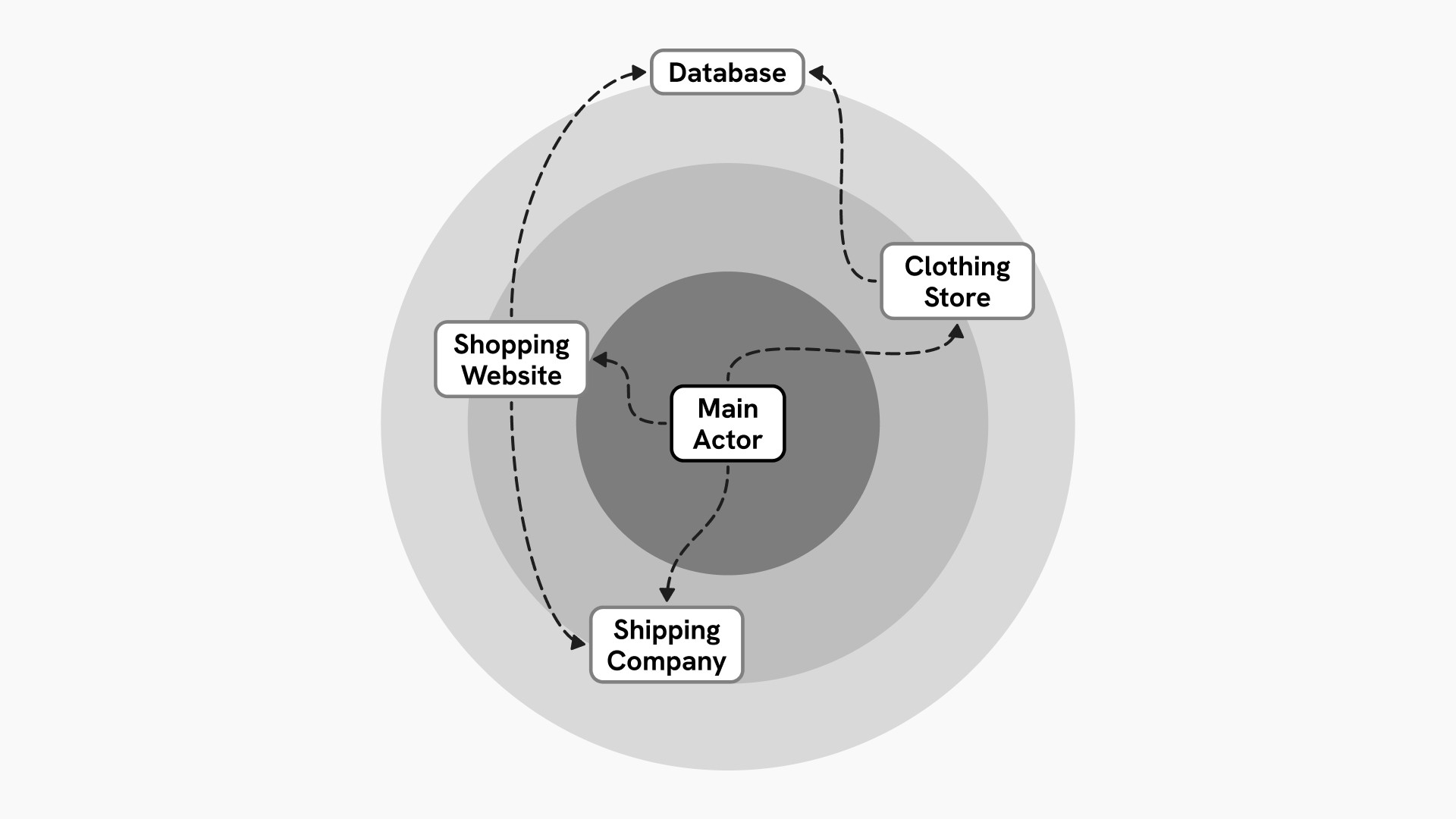
An example of the ecosystem map. During the pandemic, users were more inclined to shop online, so their relationship with the clothing store shifted more towards the online experience
An example of the ecosystem map. During the pandemic, users were more inclined to shop online, so their relationship with the clothing store shifted more towards the online experience
An example of the ecosystem map. During the pandemic, users were more inclined to shop online, so their relationship with the clothing store shifted more towards the online experience
User Interviews
Having mapped out the connections between the actors using the ecosystem map, I moved onto conducting user interviews with the participants for the project.
The intention of the interviews was to map out a user profile, learning what the user values, how their daily life is, and how those information can relate to the product.
The structure of the interviews were:
Introduction to the interview, introducing myself, and ask for permissions if the session needs to be recorded
Asking questions related to the participant, this is the step to learn more about the them, how their day-to-day life is like, what services they like to use and why
Questions related to their experience with the retail company
Closing, asking the participant if they have any questions for me, and thank for their time
User Interviews
Having mapped out the connections between the actors using the ecosystem map, I moved onto conducting user interviews with the participants for the project.
The intention of the interviews was to map out a user profile, learning what the user values, how their daily life is, and how those information can relate to the product.
The structure of the interviews were:
Introduction to the interview, introducing myself, and ask for permissions if the session needs to be recorded
Asking questions related to the participant, this is the step to learn more about the them, how their day-to-day life is like, what services they like to use and why
Questions related to their experience with the retail company
Closing, asking the participant if they have any questions for me, and thank for their time
User Interviews
Having mapped out the connections between the actors using the ecosystem map, I moved onto conducting user interviews with the participants for the project.
The intention of the interviews was to map out a user profile, learning what the user values, how their daily life is, and how those information can relate to the product.
The structure of the interviews were:
Introduction to the interview, introducing myself, and ask for permissions if the session needs to be recorded
Asking questions related to the participant, this is the step to learn more about the them, how their day-to-day life is like, what services they like to use and why
Questions related to their experience with the retail company
Closing, asking the participant if they have any questions for me, and thank for their time
Journey
After the interviews, I got in touch with the participants again for a session of going through their current experience with the online retail company.
In the beginning of the session, I presented the participants a scenario for them to use the service for that specific case. This decision was made to test how easy and versatile the service is for the users.
The structure of the session was:
Introduction, sharing the goal of the session, and go through the ethical values to let the participants know that at any point they are allowed to quit the session
The participants utilised the think aloud protocol, and I was observing as they were using the service to achieve the provided goal
As the observant, I was writing down notes on how their experience was going
Analysed where the participants got stuck, the positive and pain points
Noting down potential opportunities for the service, as an example, if a helper component can be implemented related to the service's filtering feature
The participants let me know that they reached the goal
Post session interview, where I asked how the experience was like for them:
How the participant felt
What their frustrations were
How they think that the service could improve
Closing, asking the participant if they have any questions for me, and thank for their time
With the information obtained from the session, I moved on to creating a journey map, for each participant. The utilised journey tool was developed within the BBVA group, and due to my disclosure agreement I cannot provide a sample sketch.
Journey
After the interviews, I got in touch with the participants again for a session of going through their current experience with the online retail company.
In the beginning of the session, I presented the participants a scenario for them to use the service for that specific case. This decision was made to test how easy and versatile the service is for the users.
The structure of the session was:
Introduction, sharing the goal of the session, and go through the ethical values to let the participants know that at any point they are allowed to quit the session
The participants utilised the think aloud protocol, and I was observing as they were using the service to achieve the provided goal
As the observant, I was writing down notes on how their experience was going
Analysed where the participants got stuck, the positive and pain points
Noting down potential opportunities for the service, as an example, if a helper component can be implemented related to the service's filtering feature
The participants let me know that they reached the goal
Post session interview, where I asked how the experience was like for them:
How the participant felt
What their frustrations were
How they think that the service could improve
Closing, asking the participant if they have any questions for me, and thank for their time
With the information obtained from the session, I moved on to creating a journey map, for each participant. The utilised journey tool was developed within the BBVA group, and due to my disclosure agreement I cannot provide a sample sketch.
Journey
After the interviews, I got in touch with the participants again for a session of going through their current experience with the online retail company.
In the beginning of the session, I presented the participants a scenario for them to use the service for that specific case. This decision was made to test how easy and versatile the service is for the users.
The structure of the session was:
Introduction, sharing the goal of the session, and go through the ethical values to let the participants know that at any point they are allowed to quit the session
The participants utilised the think aloud protocol, and I was observing as they were using the service to achieve the provided goal
As the observant, I was writing down notes on how their experience was going
Analysed where the participants got stuck, the positive and pain points
Noting down potential opportunities for the service, as an example, if a helper component can be implemented related to the service's filtering feature
The participants let me know that they reached the goal
Post session interview, where I asked how the experience was like for them:
How the participant felt
What their frustrations were
How they think that the service could improve
Closing, asking the participant if they have any questions for me, and thank for their time
With the information obtained from the session, I moved on to creating a journey map, for each participant. The utilised journey tool was developed within the BBVA group, and due to my disclosure agreement I cannot provide a sample sketch.
Step 2: Ideation
Wrapping up the first step of the process, I moved on to the ideation phase were I go through the material gathered from the previous stage and come up with ideas that can improve the service.
The tools used throughout this step were:
Crazy Eights
Mind mapping
All the steps were in consideration of the established design principles BBVA was using.
Step 2: Ideation
Wrapping up the first step of the process, I moved on to the ideation phase were I go through the material gathered from the previous stage and come up with ideas that can improve the service.
The tools used throughout this step were:
Crazy Eights
Mind mapping
All the steps were in consideration of the established design principles BBVA was using.
Step 2: Ideation
Wrapping up the first step of the process, I moved on to the ideation phase were I go through the material gathered from the previous stage and come up with ideas that can improve the service.
The tools used throughout this step were:
Crazy Eights
Mind mapping
All the steps were in consideration of the established design principles BBVA was using.
Crazy Eights
Using the Crazy Eights method, I was able to come up with ideas fast and easy.
I had a session with my mentor and team lead, where I went over how the first phase of the project went and then we all participated in the Crazy Eights method.
Using such a rapid way of coming up with ideas later on helped in creating a mind map on deciding which direction the project should lean towards to.
Crazy Eights
Using the Crazy Eights method, I was able to come up with ideas fast and easy.
I had a session with my mentor and team lead, where I went over how the first phase of the project went and then we all participated in the Crazy Eights method.
Using such a rapid way of coming up with ideas later on helped in creating a mind map on deciding which direction the project should lean towards to.
Crazy Eights
Using the Crazy Eights method, I was able to come up with ideas fast and easy.
I had a session with my mentor and team lead, where I went over how the first phase of the project went and then we all participated in the Crazy Eights method.
Using such a rapid way of coming up with ideas later on helped in creating a mind map on deciding which direction the project should lean towards to.
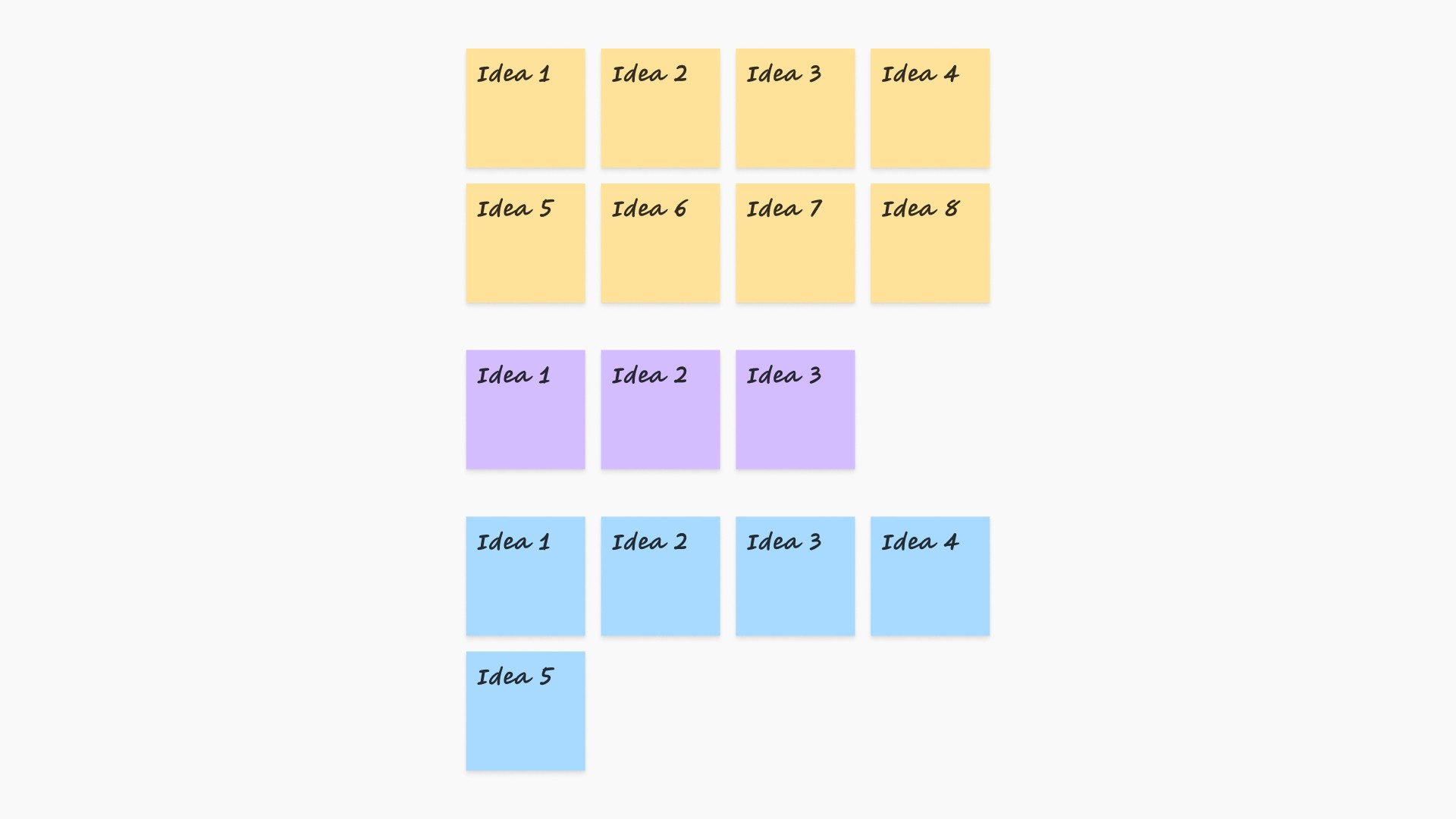
An example of the crazy eights board. It's a flexible method that can be utilised individually or as team. When using the tool within the team, it is important to note that not everyone has to exactly come up with 8 ideas
An example of the crazy eights board. It's a flexible method that can be utilised individually or as team. When using the tool within the team, it is important to note that not everyone has to exactly come up with 8 ideas
An example of the crazy eights board. It's a flexible method that can be utilised individually or as team. When using the tool within the team, it is important to note that not everyone has to exactly come up with 8 ideas
Mind Map
Collecting all the ideas that were presented during the Crazy Eights method, I mind mapped, and made connections between each idea (grouped them if they belonged under a general idea).
Mind Map
Collecting all the ideas that were presented during the Crazy Eights method, I mind mapped, and made connections between each idea (grouped them if they belonged under a general idea).
Mind Map
Collecting all the ideas that were presented during the Crazy Eights method, I mind mapped, and made connections between each idea (grouped them if they belonged under a general idea).
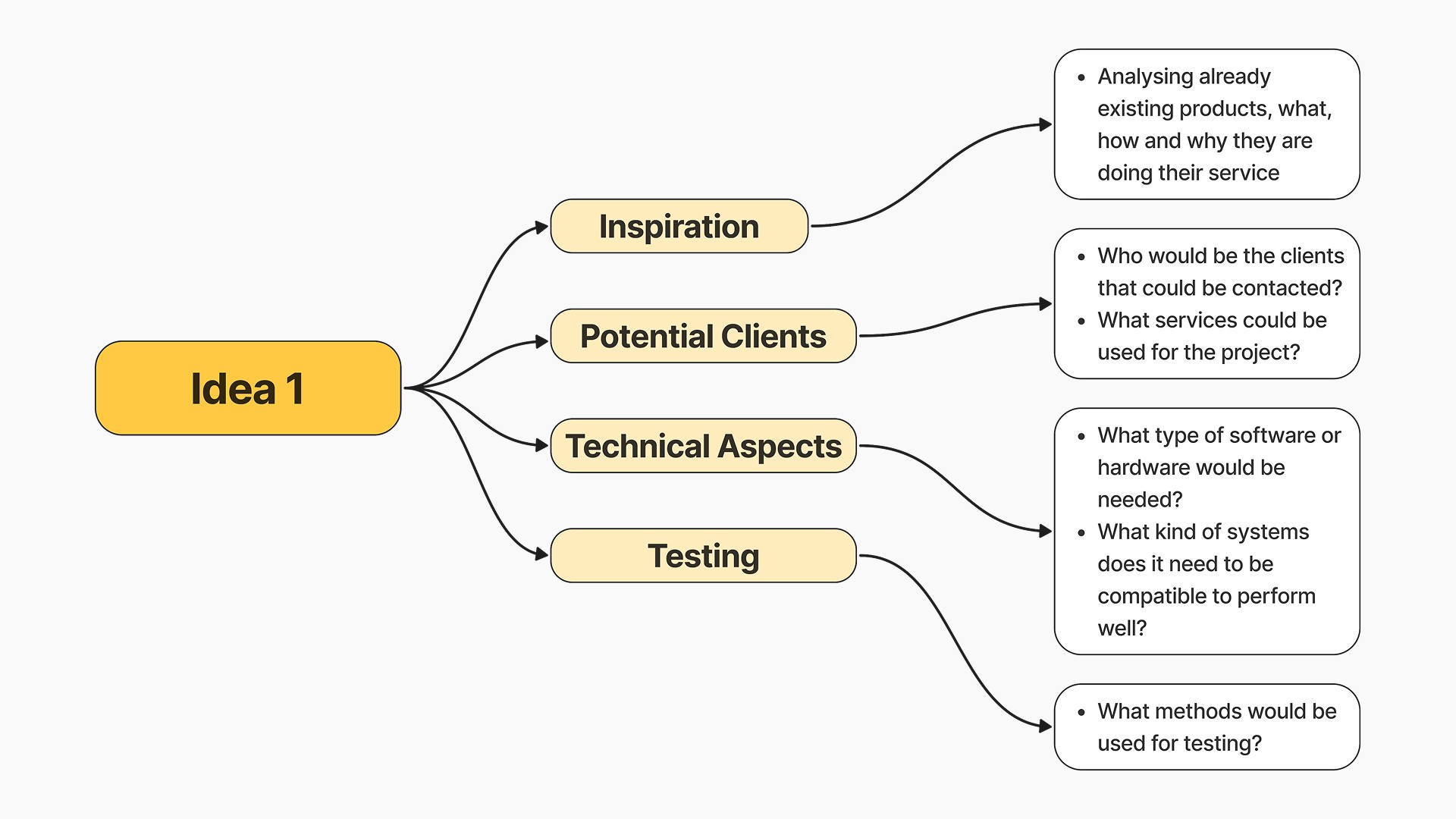
An example of how an idea gets mind mapped.
An example of how an idea gets mind mapped.
An example of how an idea gets mind mapped.
Step 3: Prototyping
In the prototyping step, I was able to create a low fidelity version of the product.
Tools used in this step:
Digital Sketching
Instead of paper prototyping, since it saved me time to get my sketches as a base for the digital designs
Interactive Prototyping
Using the programs Sketch and InVision, I was able to design and add interactions that represents an early concept of the product.
Step 3: Prototyping
In the prototyping step, I was able to create a low fidelity version of the product.
Tools used in this step:
Digital Sketching
Instead of paper prototyping, since it saved me time to get my sketches as a base for the digital designs
Interactive Prototyping
Using the programs Sketch and InVision, I was able to design and add interactions that represents an early concept of the product.
Step 3: Prototyping
In the prototyping step, I was able to create a low fidelity version of the product.
Tools used in this step:
Digital Sketching
Instead of paper prototyping, since it saved me time to get my sketches as a base for the digital designs
Interactive Prototyping
Using the programs Sketch and InVision, I was able to design and add interactions that represents an early concept of the product.
Step 4: Evaluation
As the final step for the project, I presented my concept to the team.
Throughout the meeting, since it was around the time my internship was coming to an end, we acted out how the concept and user tests usually go.
Step 4: Evaluation
As the final step for the project, I presented my concept to the team.
Throughout the meeting, since it was around the time my internship was coming to an end, we acted out how the concept and user tests usually go.
Step 4: Evaluation
As the final step for the project, I presented my concept to the team.
Throughout the meeting, since it was around the time my internship was coming to an end, we acted out how the concept and user tests usually go.
Responsibilities
Responsibilities
Responsibilities
Collaborating with the UI/UX Team
Attended standup meetings with the UI/UX team
Received mentorship from two designers
Attended several sessions to learn how a project is created, from wireframes to the final design of the UI
Contributed to the UX newsletter of the company
Presented all the design thinking steps to my mentors and the team lead, and the concepted project to the UI/UX team
Collaborating with the UI/UX Team
Attended standup meetings with the UI/UX team
Received mentorship from two designers
Attended several sessions to learn how a project is created, from wireframes to the final design of the UI
Contributed to the UX newsletter of the company
Presented all the design thinking steps to my mentors and the team lead, and the concepted project to the UI/UX team
Collaborating with the UI/UX Team
Attended standup meetings with the UI/UX team
Received mentorship from two designers
Attended several sessions to learn how a project is created, from wireframes to the final design of the UI
Contributed to the UX newsletter of the company
Presented all the design thinking steps to my mentors and the team lead, and the concepted project to the UI/UX team
Applying Design Thinking Principles
Application of the design thinking principles on a project
Learning about the UX tools
Ecosystem Map
Journey
Crazy Eights
Mind Maps
Interactive Prototyping
Concept Tests
Applying Design Thinking Principles
Application of the design thinking principles on a project
Learning about the UX tools
Ecosystem Map
Journey
Crazy Eights
Mind Maps
Interactive Prototyping
Concept Tests
Applying Design Thinking Principles
Application of the design thinking principles on a project
Learning about the UX tools
Ecosystem Map
Journey
Crazy Eights
Mind Maps
Interactive Prototyping
Concept Tests